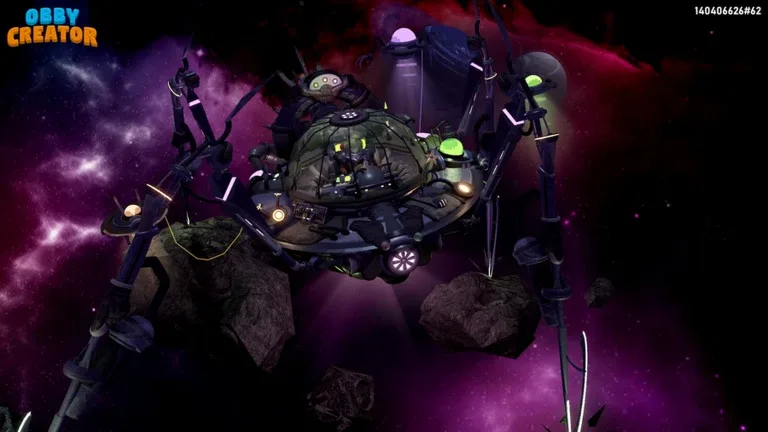
How to Build a Custom Boss Fight in Obby Creator (Roblox Guide)
Learn how to design and build your own challenging boss fights in Obby Creator. Discover creative tips for enemy mechanics, arena design, and player progression to create an engaging experience.
Published: Obby Creator Wiki Editorial Team
Table of Contents
Understanding Boss Fights in Obby Creator
If you have spent any time browsing the community creations within Obby Creator, you have likely stumbled upon intense, player-made "Boss Fight" levels. It is important to clarify that Obby Creator is, at its heart, a sandbox building platform. The game does not provide a "Boss Fight" template button that automatically generates a monster for you to fight.
Instead, the boss fights you see are testaments to the creativity of the community. Players use the robust set of building tools, logic parts, and traps provided by the game to construct interactive, challenging, and often narrative-driven encounters. When you decide to build a boss fight, you are essentially designing a puzzle or a high-stakes obstacle course where the "boss" is the primary antagonist. This guide will walk you through the logic and design principles required to create your own high-quality boss encounter.
Designing Your Boss Arena
Before you place a single block, you need to consider the environment. A boss fight requires more than just a dangerous object in the middle of a room; it needs an arena that dictates the flow of the battle.
Arena Size: If the arena is too small, players will feel claustrophobic and unable to dodge attacks. If it is too large, the boss might feel disconnected from the player. Aim for a medium-sized space that forces movement but allows for tactical positioning.
Visual Atmosphere: Use the game's palette to set a mood. A boss fight should feel different from the rest of your obby. Consider using darker colors, neon accents for "danger zones," or elevated platforms that give the boss a sense of scale and dominance.
The "Safe" Zone: Every good boss fight needs a way for players to observe the mechanics. Create a small, protected area or a ledge where players can analyze the boss's attack patterns before jumping into the fray.
How to Build Your Own Boss Encounter
Building a boss fight is an iterative process. You are essentially creating a series of "if-then" scenarios for the player to navigate.
Define the Boss Entity: Use blocks to build a physical representation of your boss. It doesn't need to be complex; a large, menacing statue or a floating machine with glowing neon parts is often more effective than a poorly animated character.
Design the Attack Patterns: Use moving parts (like rotating beams, disappearing platforms, or projectiles) to create "attacks." These should be predictable enough to dodge but fast enough to require skill.
Implement Phases: A boss fight shouldn't be static. Start with simple attacks. As the player progresses, increase the speed or complexity of the hazards.
Create a "Weak Point": Players need a goal. This could be a button they need to press while the boss is "stunned" or a platform they need to reach to "deal damage" (by hitting a trigger or completing a small jump).
Add Visual Cues: Ensure the boss "telegraphs" its attacks. For example, have a part change color or flash right before a trap activates so the player has a split-second to react.
Advanced Tips for Engaging Boss Mechanics
To make your boss fight stand out, you need to think about the player's experience. A frustrating boss is one that feels unfair, while a great boss feels like a challenge that can be overcome with practice.
Tip
Use Neon for Danger: In Obby Creator, neon parts are highly visible. Use them for your boss's attacks or projectiles. This makes it clear to the player exactly what they need to avoid, reducing "cheap" deaths.
Warning
Avoid "Laggy" Builds: While it is tempting to fill your arena with hundreds of moving parts to make the fight look chaotic, this can cause significant lag for players on mobile devices. Keep the part count reasonable to ensure the boss fight remains playable for everyone.
Managing Difficulty
The best boss fights have a natural progression. Start with a slow, singular attack pattern. Once the player has survived for a set amount of time (or reached a milestone), introduce a second, faster pattern. By the final stage of the fight, combine the previous patterns to create a "bullet hell" style challenge that tests everything the player has learned.
Community Inspiration: The "Multi-Stage" Concept
Looking at successful community creations, many of the best boss fights utilize a narrative structure. Players often build their encounters in stages:
Phase 1: The Introduction. The boss appears and performs basic attacks. The player learns the rhythm.
Phase 2: The Twist. The boss changes behavior—perhaps the arena floor begins to disappear, or the boss starts attacking from a different angle.
Phase 3: The Climax. The final, most difficult phase. This is where you reward the player for their perseverance. Once they survive this, they should feel a genuine sense of accomplishment.
Always remember that in Obby Creator, the "boss" is a construct of your imagination. You are not limited by game physics or pre-made AI; you are limited only by the tools you have and your ability to arrange them into an engaging experience.
Frequently Asked Questions
Can I make a boss that actually moves and follows the player?
Because Obby Creator is a sandbox building game, you cannot program complex AI behavior like a traditional NPC. However, you can create the illusion of movement by using moving parts, conveyor belts, and scripted triggers to make the boss appear to track or chase the player.
How do I make the boss "die" or be defeated?
You can create a "win" condition by having the player reach a specific area or hit a button once the boss phase is complete. This button can trigger a teleporter to the next stage or simply remove the boss parts from the map to signify victory.
Are there limits to what I can build for a boss?
Yes, you are bound by the part limits of your build slot. Focus on quality over quantity. A well-designed, small-scale boss fight is often more fun and less laggy than a massive, sprawling structure that is hard to navigate.
Building a boss fight in Obby Creator is a great way to showcase your skills as a level designer. Start small, test your mechanics frequently, and don't be afraid to iterate based on feedback from players who try your level. Happy building!